The Digital Trellis: Integrating Technology into Your Discipleship Ecosystem
As churches transition from program-driven, attendance-based models to living discipleship ecosystems, a common question arises: Where does digital technology fit into the garden?
Some leaders fear that digital tools dilute relational intimacy, while others lean so heavily into virtual platforms that community becomes transactional and detached. In a true "Mapped Garden" culture, technology is neither the hero nor the enemy. Digital tools serve as the trellis—the structure that supports, guides, and accelerates real-life relational soil.
When leveraged intentionally, digital tools extend the reach of your pathways, streamline administrative friction, and keep believers connected between face-to-face gatherings. So, before we rush headlong into the abyss, LOL, let’s discuss some ideas where technology can lend assistance positively to the discipleship experience.
1. Virtual Small Groups: Are They Advisable?
The short answer is yes, but with intentionality. Virtual small groups (via platforms like Zoom, Google Meet, or Microsoft Teams) should not replace local, in-person relational gathering as the primary standard, but they serve as critical "access ramps" for specific seasons and demographics.
When Virtual Groups Excel:
Life-Stage Constraints: Parents with young children, shift workers, or individuals with mobility/health limitations who cannot regularly commute on a weeknight.
Short-Term Cohorts: A 4-week Love God, Love Neighbor introductory pathway often sees higher completion rates online because the friction of travel and childcare is removed.
Geographic Expansion: Multi-site churches or regional congregations where members live 30+ minutes apart.
Best Practices for Virtual Groups:
Enforce the 50/50 Rule: Online fatigue is real. Spend the first 20 minutes doing unscripted, warm check-ins before opening curriculum slides.
Cap Group Size at 6–8 Screens: Larger virtual calls default to a lecture format where quiet members hide. Smaller rooms encourage active participation.
Camera-On Culture & Relational Safety: Establish a boundary early: groups work best when everyone is visually present, muted when not speaking, and fully engaged.
Plan In-Person "Touchpoint" Meals: If geographically feasible, host an in-person social gathering once every 4–6 weeks to ground the virtual connection in physical space.
2. Communication Platforms: Staying Connected Between Sundays
Discipleship doesn't happen exclusively during a 90-minute weekly meeting; it happens in the spaces between. Moving communication off cluttered email threads and into dedicated channels keeps the community active throughout the week.
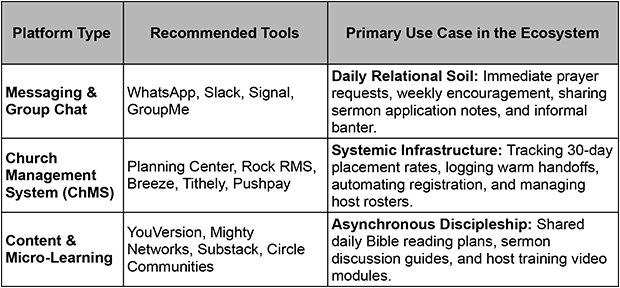
Communication Best Practices for Leaders:
Keep It Centralized: Encourage each group host to pick one primary chat platform (e.g., a dedicated WhatsApp group) so communication isn't scattered.
Set Healthy Boundaries: Encourage hosts to establish clear quiet hours (e.g., no non-urgent texts after 9:00 PM) to protect family time and prevent leader burnout.
3. Innovative Digital Enhancements for Your Discipleship Strategy
Beyond video calls and messaging apps, modern digital platforms offer powerful ways to elevate your discipleship ecosystem:
Asynchronous Leader Training (Micro-Modules): Instead of requiring hosts to attend 2-hour Saturday training sessions, deliver 3-minute host training videos via text or email. Leaders can digest host tips on the 50/50 rule or warm handoffs on their own schedule.
Digital Soil Diagnostics: Use online survey tools (Google Forms, Jotform, Typeform) to administer regular relational health audits across your groups. Tracking data like placement lag times and vulnerability scores reveals friction points before members drop out.
Shared Bible Reading Plans: Utilize platforms like YouVersion to launch church-wide reading plans that synchronize with your Sunday preaching series. When group members read the same Scripture throughout the week, group discussion shifts from passive listening to active sharing.
Digital Prayer Walls: Implement a secure, group-only digital prayer board where members can update prayer requests in real time and mark items as "answered," building collective faith across the cohort.
Summary: The Trellis Serves the Fruit
Technology should never be implemented for its own sake. Every digital tool, platform, or virtual group you introduce must answer a single question: "Does this help our people love God and love their neighbor deeper?"
When tech is placed in the service of building relational depth, it ceases to feel like cold administration. It becomes a vital trellis—supporting healthy host gardeners, guiding newcomers smoothly along pathways, and allowing your discipleship ecosystem to bear lasting fruit.
Share in the comments how you have effectively used technology to support your discipleship ministries!